
From SEO to AEO: How AI Is Changing the Way Brands Get Discovered in 2027
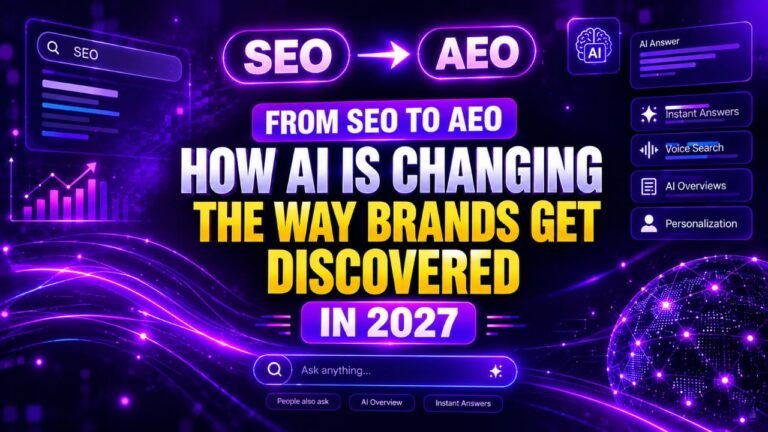
Type a question into Google today and notice what happens. Half the time, you don’t even click a link anymore. An AI-generated answer sits right at the top, pulling information from multiple sources and giving you the gist in seconds. That’s the shift brands across India and Kerala need to understand right now. Search Engine Optimization, the SEO we’ve all built strategies around for years, is slowly sharing space with something new: Answer Engine Optimization, or AEO.
If you run a business, manage a website, or work in digital marketing, this change isn’t something to watch from the sidelines. It’s already affecting how customers in Kochi, Bangalore, and Delhi find products and services online.
What Exactly Is AEO?
SEO was built for a world of blue links. You optimized keywords, built backlinks, and hoped to rank on page one. AEO works differently. It’s about optimizing your content so AI tools like Google’s AI Overviews, ChatGPT, and Perplexity can pull your information directly into their answers.
Instead of asking “how do I rank higher on Google,” the real question becomes “how do I get my business mentioned when someone asks an AI assistant a question.”
A small ayurvedic wellness brand in Kerala, for instance, used to worry about ranking for “best ayurvedic oil for hair growth.” Now they also need to worry about whether an AI chatbot recommends their product when someone simply asks, “which ayurvedic hair oil actually works?”
Why This Matters More in India Than You'd Think
India has one of the fastest-growing bases of AI tool users in the world. Students use ChatGPT for research. Shoppers ask Google’s AI Overview before buying electronics. Even small restaurant owners in Kerala are noticing customers say things like “the AI told me about your place” instead of “I saw your listing on Google.”
This isn’t a Silicon Valley trend anymore. It’s happening in tier two and tier three cities too, where mobile-first users often skip typing long searches and instead ask voice assistants or AI chat tools direct questions.
For local businesses, this means visibility now depends on something bigger than just showing up in search results. It means being the source that AI trusts enough to quote.
How Brands Can Actually Prepare for AEO
Write Content That Directly Answers Questions
AI tools favor content that gives clear, direct answers early on. If someone asks “what is the best time to visit Munnar,” your blog shouldn’t bury the answer under five paragraphs of scenic description. Give the answer in the first two lines, then expand with details.
This doesn’t mean sacrificing quality. It means respecting how people actually search now, quickly and with intent.
Use Structured Data and FAQs
Websites using proper schema markup, FAQ sections, and clearly labeled headings get picked up more easily by AI crawlers. A Kerala-based homestay business that adds a simple FAQ section, covering things like pricing, check-in times, and nearby attractions, gives AI tools an easy, quotable source to pull from.
Build Genuine Authority, Not Just Backlinks
AI models are trained to trust sources that show real expertise. A local dermatologist’s clinic writing detailed, accurate content about skincare in humid climates will likely get referenced more than a generic content farm article. Authenticity and expertise matter more than ever.
Keep Content Updated
Outdated information is a red flag for both search engines and AI tools. A Kochi-based travel agency that hasn’t updated its “best time to visit Wayanad” post since 2022 risks being ignored in favor of fresher, more accurate content.
Don't Abandon Traditional SEO
AEO doesn’t replace SEO. It builds on it. Keyword research, site speed, mobile optimization, and quality backlinks are still the foundation. Think of AEO as an extra layer, not a replacement.
Real Examples Already Happening
A few Kerala-based businesses have quietly started adapting. Local tour operators are rewriting their websites to answer common traveler questions directly, things like “is Munnar safe to visit alone” or “how many days are enough for Alleppey backwaters.” These aren’t keyword-stuffed articles. They read like a knowledgeable friend answering a question, which happens to be exactly what AI tools prefer to quote.
In the broader Indian market, e-commerce brands selling regional products, from Kashmiri saffron to Tamil Nadu silk sarees, have started adding detailed product FAQs and origin stories. This content performs well both in traditional search and when AI tools summarize product recommendations.
What This Means for Digital Marketers in 2026 and Beyond
The marketers who succeed going forward won’t just chase rankings. They’ll focus on becoming a trusted, quotable source of information. That means:
- Writing content that genuinely answers real questions people ask
- Structuring web pages so both humans and AI tools can easily understand them
- Building real expertise and credibility, not just keyword density
- Staying updated with how AI search tools evolve, since this space is changing fast
Businesses in India, especially smaller ones without huge marketing budgets, actually have an opportunity here. AEO rewards genuine, well-organized information over big advertising spend. A well-written, honest FAQ page from a small Kerala business can outperform a poorly optimized page from a much bigger competitor.
The Road Ahead
Search behavior is changing faster than most businesses realize. People aren’t just Googling anymore, they’re asking, and AI is answering on their behalf. Brands that adapt now, by focusing on clear answers, real expertise, and updated content, will be the ones AI chooses to recommend.
The shift from SEO to AEO isn’t about abandoning what worked before. It’s about building on it, so that whether a customer types a search query or asks an AI assistant a question, your business is the answer they get.